Plantar warts can be surprisingly easy to ignore when they first show up.
Maybe you notice a small rough spot on the bottom of your foot. It doesn’t hurt much, so you leave it alone. Then weeks or months pass, and you realize it’s still there.
Maybe it’s gotten bigger, causes discomfort when you walk, or has even invited a few unwelcome neighbors to the party.
You may have even tried treating it, only to wind up feeling more frustrated when it refuses to budge or eventually comes back.
There’s a reason plantar warts can be so annoyingly persistent.
It’s because there’s more going on beneath the surface.
That rough spot isn’t simply unwanted skin. Plantar warts are caused by certain strains of the human papillomavirus (HPV), which can evade your body’s immune response and linger for a long time.
That helps explain why treating plantar warts isn’t always as simple as removing what you can see. It’s also why City Step Podiatry is excited to offer Swift® Microwave Therapy, a non-invasive treatment that taps your immune system to help fight the infection at the source.
To understand why Dr. Young chose to add Swift to City Step Podiatry’s cutting-edge treatment options, let’s take a closer look at what makes plantar warts so stubborn—and how Swift approaches them differently.
What Exactly Is a Plantar Wart?
A plantar wart, also called a verruca plantaris or simply a verruca, is a benign skin growth caused by HPV.
While “verruca” is used more commonly in the United Kingdom, U.S. patients are more likely to hear the term “plantar wart.” Either way, we’re talking about the same pesky problem.
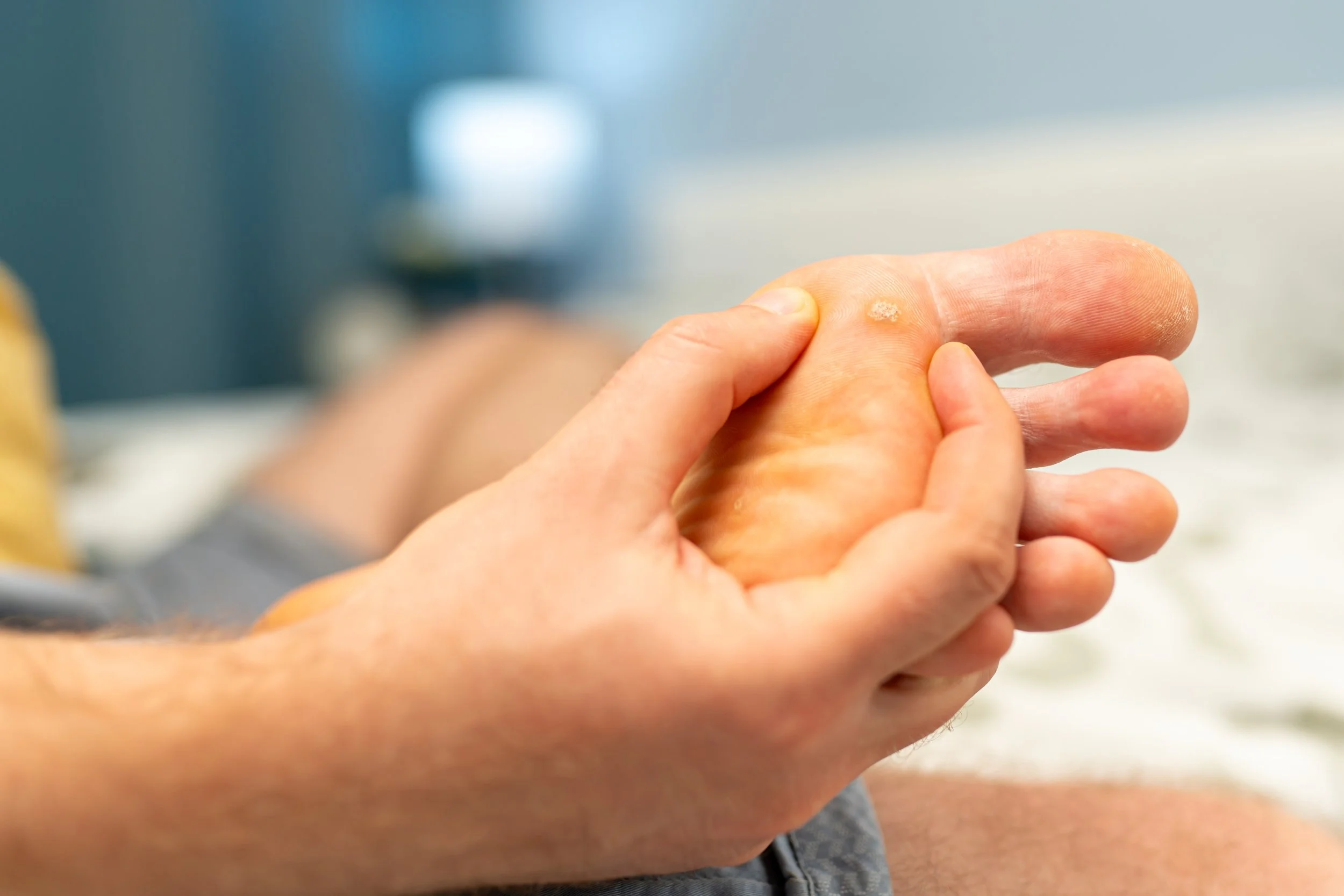
Plantar warts happen when the HPV virus enters the skin through a small cut or weak spot and infects skin cells. They develop on the soles of the feet, commonly appearing on the heels, balls of the feet, or around the toes.
They may look like:
A rough or grainy growth on the bottom of your foot
Thickened skin or a callus over a defined spot
A lesion with tiny black or brown dots, which are actually small clotted blood vessels
A single wart or a cluster of warts, known as mosaic warts
Because plantar warts often develop on weight-bearing areas, pressure can push them inward beneath thickened skin, making them tender or painful when standing, walking, or running.
They’re also contagious. HPV can spread through direct contact or contaminated surfaces, particularly warm, damp environments such as locker rooms, communal showers, and swimming pool areas.
Although plantar warts aren’t usually a serious health problem, they can be challenging to get rid of. HPV remains within the outer layers of the skin and can avoid triggering the immune response that might otherwise clear an infection quickly.
Some warts eventually disappear on their own once the immune system recognizes and begins fighting the infection, but that can take a year or two. Until then, a wart may persist, spread, or return after treatment.
And that matters when deciding how best to treat it.
What Are the Traditional Treatments for Plantar Warts?
There’s no single treatment that’s right for every plantar wart.
For smaller or newer warts, an over-the-counter salicylic acid product may be a reasonable place to start.
Salicylic acid gradually removes layers of wart tissue and generally requires repeated applications over several weeks.
Other plantar wart treatment options may include:
Prescription-strength topical medications
Cryotherapy, which uses liquid nitrogen to freeze the wart
Cantharidin, which causes a blister to form beneath the wart
Laser or electrocautery treatments, which use energy to destroy affected tissue
Surgical removal in certain cases
Immunotherapy, which works by stimulating an immune response against the virus
The right treatment for your plantar warts depends on the wart’s size, location, duration, symptoms, previous treatments, and your overall health.
But there’s a catch: These common treatments don’t work consistently for every plantar wart.
For example, research comparing cryotherapy with salicylic acid found no significant difference between the two approaches, with complete clearance rates remaining relatively low at 12 weeks.
That doesn’t mean these treatments aren’t useful or even effective for some. It illustrates just how difficult plantar warts can be to treat, and why podiatrists sometimes need more than one way to approach them.
This is where Swift offers something different.
What Is Swift Microwave Therapy and How Does It Work?
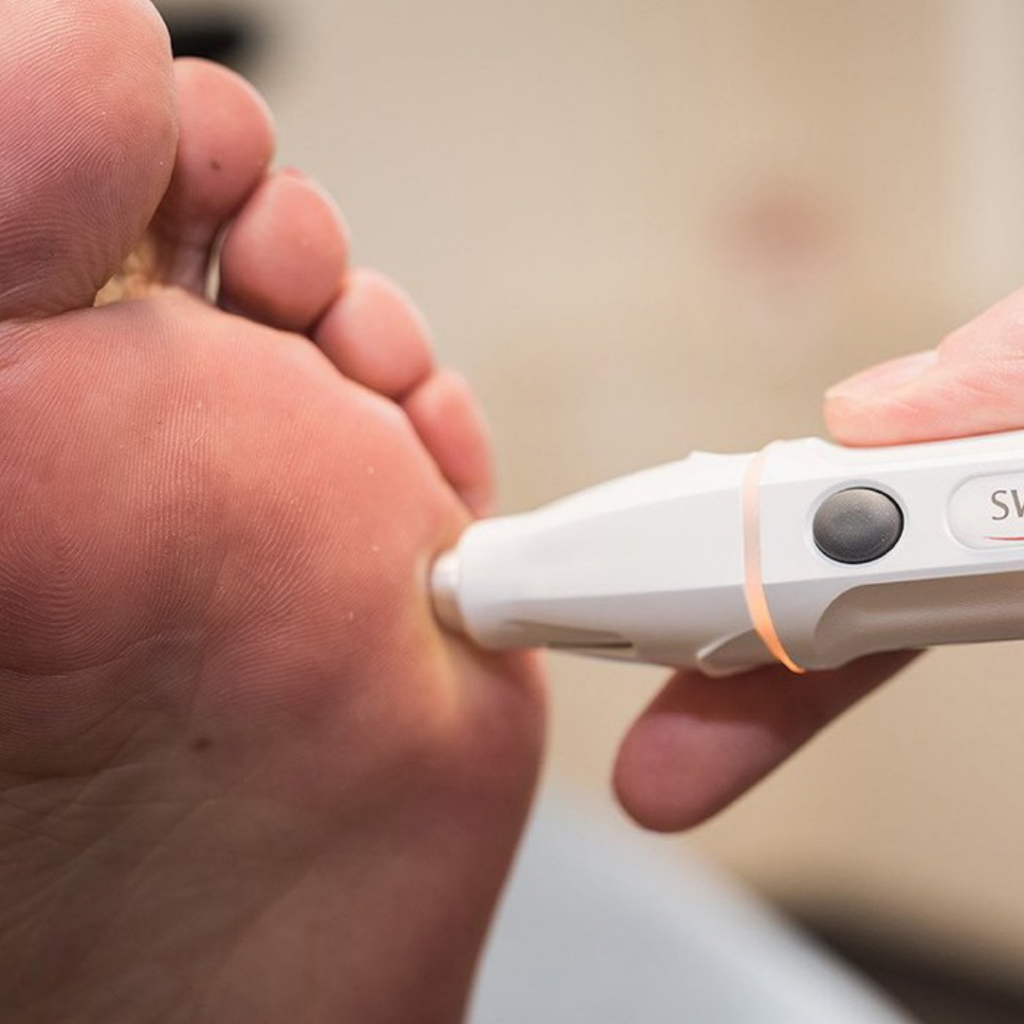
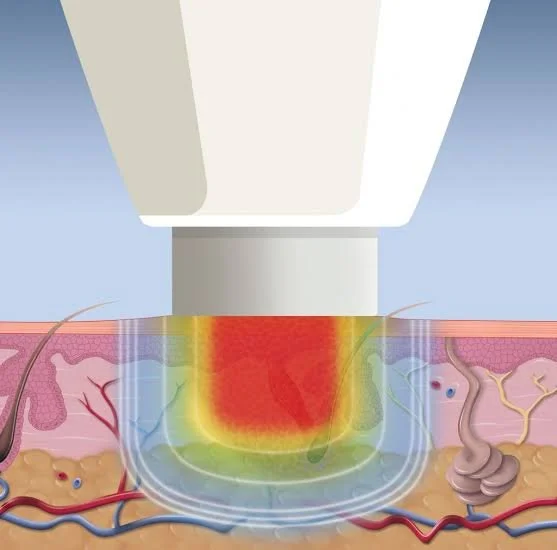
Swift is a non-invasive treatment approach that uses precisely controlled microwave energy delivered through a specialized probe placed against the wart. Each application lasts only a few seconds.
Unlike commonly used treatments designed primarily to cut, freeze, or remove wart tissue, Swift briefly delivers this energy to heat the affected tissue and trigger a localized immune response.
Remember, a plantar wart is the result of an HPV infection. Swift is designed to help alert your immune system to HPV-infected cells it may have been overlooking.
In other words, Swift isn’t simply trying to get rid of the outward bump. It alerts your immune system to recognize what’s causing it and tells it to kick into high gear to address the issue and start targeting the affected cells.
Because Swift doesn’t cut the skin or create an open wound, there’s typically no wound care or lengthy recovery period afterward, as is the case with some other approaches.
How Effective Is Swift for Plantar Warts?
A treatment can sound great on paper, but what really matters is whether it works.
Although microwave therapy is newer than familiar wart treatments like salicylic acid and cryotherapy, the research on it has already shown promising results.
So let’s dig into the data—
In one U.S. study of 85 patients who received microwave therapy for plantar warts, more than 86% of those who completed treatment experienced complete wart clearance. Results varied depending on the number of treatments received, and not every patient responded to treatment.
More recent research has also put microwave therapy to the test against a placebo.
In a 2025 study of adults with long-standing plantar warts that had resisted previous treatment, complete clearance occurred only among participants who received microwave therapy. After three treatments spaced four weeks apart, 27.3% of the treatment group achieved complete clearance, compared with none of the participants receiving placebo treatment.
These results are encouraging, particularly when we’re talking about plantar warts that can be notoriously difficult to treat.
But research on microwave therapy is still developing, and no plantar wart treatment works for every person, every time.
Swift gives podiatrists another evidence-based treatment tool for their toolbox.
What Are the Potential Benefits of Swift?
One of Swift’s biggest advantages is what treatment doesn’t require.
There’s no incision. No freezing. No acid applied to your skin. And its non-invasive nature also means you generally won't leave the office with bandages or wound-care instructions.
Other potential benefits include:
Quick treatments—Microwave energy is delivered to each targeted area in a matter of seconds.
Minimal disruption—You can typically return to your usual activities immediately after treatment.
No injections or local anesthetic in most cases—Treatment is delivered directly through the Swift probe.
No ongoing at-home treatment—The treated area generally doesn't require special care between appointments.
For active people, the lack of downtime can be especially appealing. You can typically walk out of your appointment and get right back to your day.
Does Swift Treatment Hurt?
Let’s tackle another question you may really want answered.
Is this going to hurt?
Because the truth is that “non-invasive” doesn't necessarily mean “you won't feel anything.”
During your Swift treatment session, you may experience a brief, sharp sensation while the microwave energy is delivered.
Fortunately, each application lasts only a few seconds, and the sensation typically subsides quickly once the energy stops.
Some patients do notice mild soreness afterward, although it generally doesn't interfere with normal daily activities.
Of course, everyone experiences discomfort differently. The number, size, and location of your warts can affect what treatment feels like. That’s why it’s always wise to talk over new treatment options with your trusted podiatrist first to select the best option for you.
What Can You Expect From Swift Treatment at City Step Podiatry?
First things first: We need to make sure that spot on your foot is actually a wart.
Before recommending Swift, Dr. Young or Dr. Lalani will examine the area and determine what's causing it and whether microwave therapy is an appropriate treatment option.
That distinction matters more than you might think.
Corns, calluses, and other skin lesions can sometimes resemble plantar warts, but they aren't the same problem and may require a different approach.
When Swift is an appropriate treatment option, City Step Podiatry offers it as a series of three treatment sessions spaced approximately four weeks apart.
Why the wait between appointments?
Remember, Swift is working with your immune system rather than simply removing the visible wart.
Your body needs time to mount that immune response between treatments.
That also means you shouldn't expect to walk out after one session and watch your wart disappear overnight. Results take time, and every patient responds differently.
Is Swift Right for Every Plantar Wart?
By now, you probably know what we're going to say.
It depends.
Your wart's size, location, how long it's been hanging around, whether it hurts, treatments you've already tried, and your overall health can all factor into what makes sense for you.
Swift may be worth discussing when a plantar wart:
Has persisted or returned despite previous treatment
Is painful or interfering with your daily activities
Has spread or developed into a cluster
Hasn't responded well to—or you've had difficulty tolerating—other treatment approaches
And if Swift isn't the right choice for you, that doesn't mean you're out of options.
Dr. Young and Dr. Lalani can evaluate what’s going on and recommend an approach based on your individual needs.
Want to learn more about when a foot problem deserves professional attention? Check out our guide to what podiatrists treat and when it may be time to make an appointment.
Podiatry Care That Keeps Moving Forward
Swift may be the newest addition to City Step’s treatment options, but keeping pace with advances in podiatric medicine has always been part of Dr. Young’s approach to patient care.
She stays on top of the research so you can benefit from innovative, evidence-based advances in podiatric care. That gives you a wider range of treatment options and helps her find the right approach for you.
With Dr. Lalani now part of the team, you also have another experienced podiatrist to turn to and even more flexibility when making appointments.
Because when your feet are bothering you, fitting podiatric care into your busy schedule shouldn’t mean rearranging your entire life to get it.
As City Step continues to grow, you can expect the same personalized care—with more treatment options, greater flexibility, and new ways to keep your feet healthy and active.
Ready to get back to feeling your best from the ground up? Schedule your appointment with Dr. Young or Dr. Lalani online anytime.
City Step Podiatry is here for you! Reach out today to schedule your visit and treat your feet to the care they deserve.